

Energy Sector
Petrochemical
Polyurea is engineered for the extreme operating conditions of the petrochemical industry, delivering a high-build, chemically inert lining system capable of withstanding continuous exposure to hydrocarbons, aromatics, aliphatic solvents, acids, caustics, and process by-products.
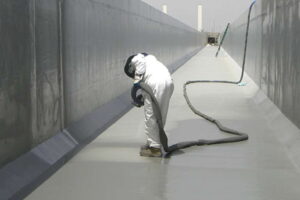
Applied using heated, high-pressure plural-component spray equipment with precise ratio control, polyurea rapidly polymerizes to form a fully cured elastomeric membrane within seconds, allowing for installation on live or fast-track shutdown projects with minimal downtime.
Typical applications include secondary containment floors and walls, tank annular spaces, pipe racks, concrete trenches, sumps, and steel structures, where its low water vapor transmission rate and near-zero permeability prevent chemical ingress and corrosion propagation.
Read More
Polyurea’s high tensile strength, elongation, and crack-bridging capability accommodate substrate movement, vibration, and thermal cycling without cohesive or adhesive failure. When installed over properly prepared substrates—such as SSPC-SP10/NACE No. 2 abrasive blasting with appropriate primers—polyurea forms an aggressively bonded, seamless barrier that outperforms epoxies and conventional membranes in durability, impact resistance, and service life, making it a critical asset protection system for high-risk petrochemical environments.
PRIMARY AND SECONDARY CONTAINMENT
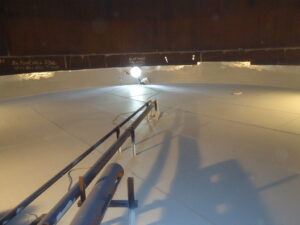
When restoring or upgrading primary and secondary containment systems, polyurea represents the pinnacle of engineered protection—the definitive solution for facility owners who demand performance, longevity, and peace of mind. Its monolithic, seamless membrane adheres flawlessly to steel, concrete, and composite substrates, creating a continuous, impermeable barrier that eliminates every potential point of leak or chemical migration. Unlike conventional coatings or liners, polyurea’s rapid-set, elastomeric chemistry penetrates micro-porosity and accommodates structural movement, ensuring that the containment system remains fully sealed under thermal cycling, vibration, and mechanical stress.
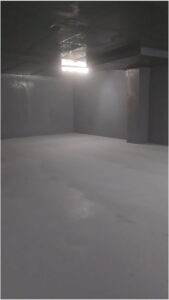
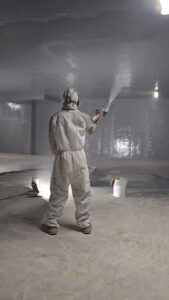
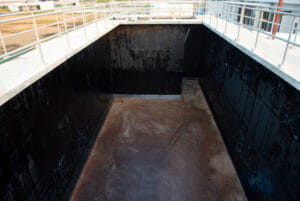
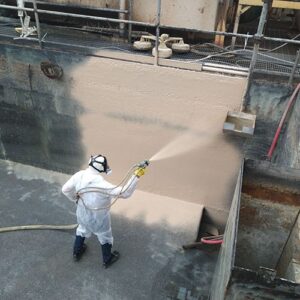
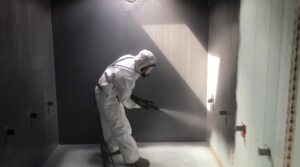
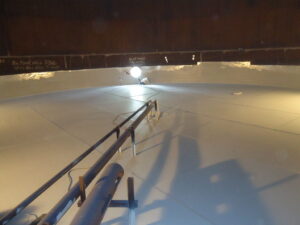
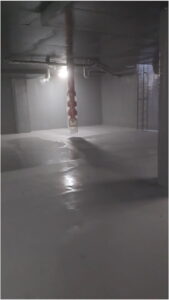
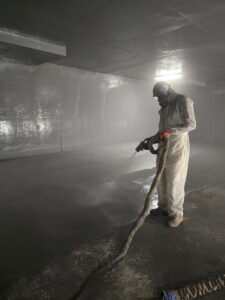
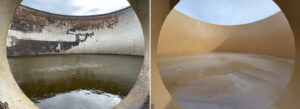
For existing tanks and containment structures, polyurea delivers unmatched restoration performance. Its extraordinary chemical resistance, abrasion tolerance, and impact resilience outperform all alternative solutions, making it the definitive choice for high-value assets where failure is not an option. With decades of maintenance-free service life, polyurea eliminates recurring downtime, costly repairs, and the operational risks associated with traditional coatings.
Read More
From a facility management perspective, polyurea is not just a coating—it is an investment in reliability, compliance, and operational excellence. By specifying polyurea, owners secure a containment system that is future-proof, fully certified, and engineered for the harshest industrial conditions, elevating the facility to the highest standard of safety and performance.
Chemical Processing
Polyurea is a high-performance elastomeric coating specifically engineered for the demanding environments of chemical processing plants. Its rapid, solvent-free, 100% solids formulation enables near-instantaneous curing, forming a seamless, monolithic membrane that adheres tenaciously to concrete, steel, and other industrial substrates. Polyurea exhibits exceptional resistance to a wide spectrum of aggressive chemicals, including concentrated acids, alkalis, solvents, and hydrocarbons, while maintaining mechanical integrity under thermal cycling, high-impact loads, and repeated thermal expansion and contraction. Its superior tensile strength, elongation, and abrasion resistance allow it to bridge microcracks and withstand heavy foot and equipment traffic without delamination.
Read More
When applied to secondary containment areas, sumps, trenches, piping supports, and structural elements, polyurea provides impermeable, long-lasting protection against chemical infiltration, substrate corrosion, and environmental degradation, drastically reducing maintenance requirements and downtime. Its performance ensures regulatory compliance and asset longevity, making it the technical standard for protective coatings in chemical processing environments.
Water Treatment Systems
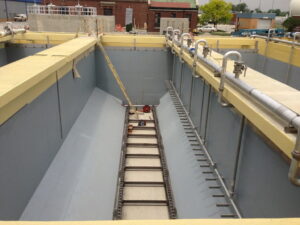
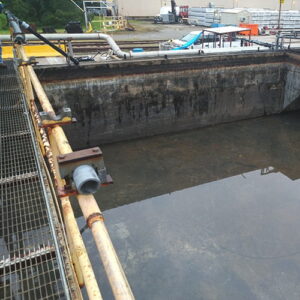
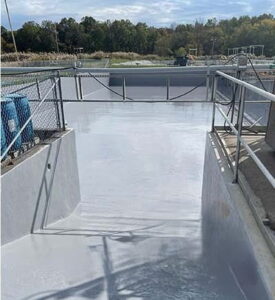
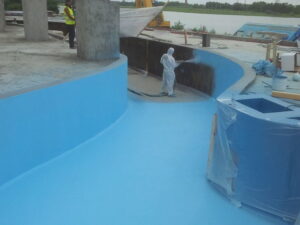
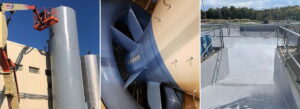
Polyurea is an advanced protective coating engineered for critical water treatment infrastructure, offering exceptional chemical, abrasion, and corrosion resistance across a broad pH range and exposure to aggressive process chemicals. Its rapid 1–5 minute gel time enables installation with minimal operational downtime, while its superior adhesion to steel, reinforced concrete, and composite substrates ensures long-term structural integrity.
The material’s elastomeric properties accommodate dynamic loading, thermal cycling, and substrate movement without cracking or delamination, maintaining a fully monolithic, impermeable barrier. Polyurea effectively prevents leakage, infiltration, and microbial growth in potable water tanks, clarifiers, sludge basins, chemical dosing areas, and piping systems, outperforming conventional epoxy and polyurethane linings.
Read More
With service temperatures ranging from –40°C to 120°C, UV stability, and excellent hydrolytic resistance, polyurea provides extended service life, reduced maintenance cycles, and enhanced operational safety, establishing it as the industry-standard solution for modern water treatment system protection and containment.
Structured Metals
Polyurea elastomeric coatings exhibit a combination of mechanical and chemical properties that make them superior for structural metal protection: typical tensile strength ranges from 20–31 MPa (3,000–4,500 psi), elongation at break exceeds 300–500%, and shore A hardness typically 80–95, enabling the coating to absorb dynamic stresses and substrate vibration without microcracking or cohesive failure. Rapid amine-based polymerization yields gel times on the order of 1–5 seconds and full handling strength within minutes, minimizing downtime and solvent exposure.
The inherently hydrophobic, crosslinked urea network provides excellent corrosion resistance (significantly lowering corrosion current density in salt spray tests versus uncoated steel), chemical resistance to acids, caustics, and fuels, and thermal stability from –40 °C to +120 °C in service, with select formulations rated higher. Polyurea’s high elongation and low modulus ensure compatibility with substrate CTE (coefficient of thermal expansion) mismatches in structural steel, aluminum, and galvanized surfaces, reducing interfacial stresses.
Read More
It establishes robust adhesion mechanisms (mechanical interlock and secondary bonding) on prepared blast-cleaned substrates, typically exceeding 5–10 MPa (700–1,500 psi) pull-off adhesion. These performance metrics position polyurea coatings as the preferred protective system for a wide array of structural metal applications, including structural steel beams, columns, and trusses; bridge girders and decks, industrial piping and pressure vessels, metal roofing and siding panels; storage and process tanks; offshore platforms and marine steelwork, reinforced metal walkways, platforms, and stairways, guardrails and safety barriers, and wastewater/chemical handling infrastructure. The combination of rapid cure, high tensile/elongation performance, chemical barrier integrity, and thermal cycling durability results in extended service life and reduced life-cycle costs compared to conventional epoxies, urethanes, and zinc-rich primers.