

Advanced Coatings
Polyfusion
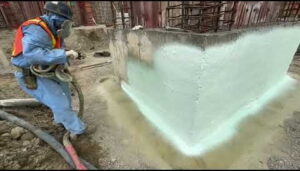
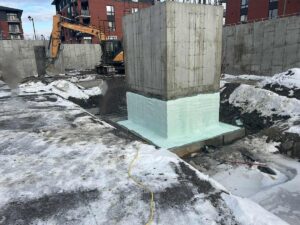
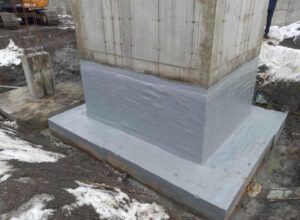
POLYFUSION is a technically engineered, spray-applied system that integrates closed-cell polyurethane foam with a high-solids, elastomeric polyurea membrane to create a fully bonded, monolithic waterproofing assembly.
1
The application begins with precision-applied spray foam, which expands and adheres at the molecular level to the substrate, achieving high compressive strength, exceptional R-value per inch, and a continuous air, vapor, and moisture barrier while accommodating complex geometries and penetrations.
2
Once cured, the foam is encapsulated with a rapid-set polyurea coating that forms a seamless, flexible membrane with outstanding tensile strength, elongation, and resistance to water ingress, chemicals, abrasion, and thermal cycling.
Read More
By chemically and mechanically bonding these layers into a single system, POLYFUSION eliminates interlayer failure, seams, and termination points common in traditional assemblies, delivering a high-performance waterproofing solution that enhances thermal efficiency, structural continuity, and long-term durability in demanding commercial, industrial, and infrastructure applications.
BLIND-SIDE WATERPROOFING
POLYFUSION represents a technically advanced solution for blindside waterproofing, engineered to surpass traditional sheet membranes, bentonite boards, and multi-component systems by delivering a fully monolithic, chemically bonded assembly in a single, precision-controlled application. In blindside conditions—where access is constrained and hydrostatic pressures are high—the closed-cell polyurethane spray foam is applied directly against the shoring or excavation face, achieving complete substrate encapsulation, void fill, and structural adhesion.
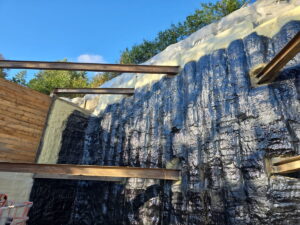
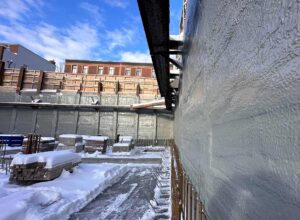
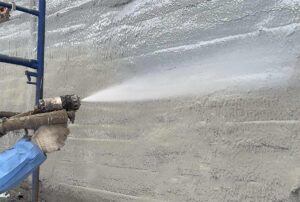
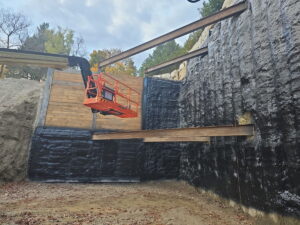
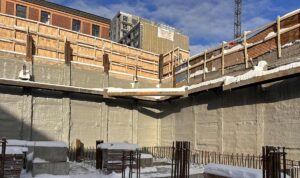
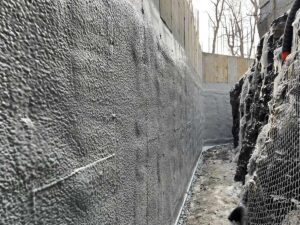
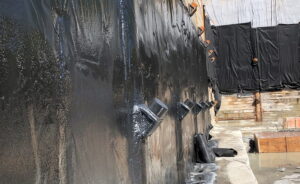
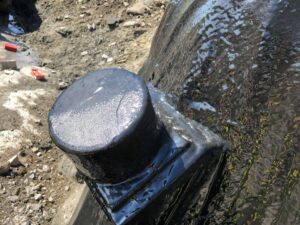
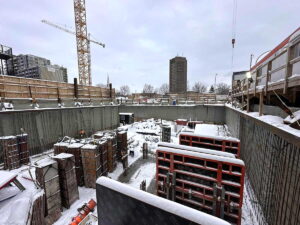
This foam layer simultaneously provides thermal insulation, compressive strength, and a continuous air and moisture barrier. Immediately overlaid with a high-solids, rapid-curing polyurea membrane, the system forms a flexible, elastomeric, and seamless waterproofing layer with exceptional tensile strength, elongation, hydrostatic resistance, and chemical durability.
Read More
By eliminating discrete layers, laps, and terminations, POLYFUSION reduces installation time, on-site material handling, storage requirements, and potential for workmanship-related failures.
The integrated foam–polyurea interface ensures long-term adhesion and system continuity under dynamic soil and groundwater conditions, delivering a technically superior blindside waterproofing solution with optimized performance, reduced labor, and predictable, long-term reliability compared to conventional blindside applications.
INSULATED CONCRETE FORMS
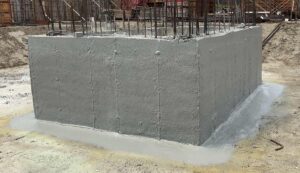
Polyurea-based coatings provide a technically superior waterproofing solution over conventional peel-and-stick membranes such as Restisto or Blueskin when applied to ICF (Insulated Concrete Form) construction. Unlike sheet membranes, which rely on adhesive bonding and are prone to seam failure, air entrapment, and substrate irregularities, polyurea forms a continuous, monolithic elastomeric membrane that chemically adheres directly to the concrete substrate, ensuring complete continuity and eliminating weak points. Its high tensile strength, elongation, and impact resistance provide inherent mechanical protection, removing the need for dimple boards or additional protective layers traditionally required to shield peel-and-stick membranes from construction or backfill damage.
Read More
The rapid-curing, spray-applied process allows immediate resistance to hydrostatic pressure up to 300 feet below grade, while maintaining full adhesion and waterproofing performance without primers or multi-layer assemblies. Polyurea exhibits superior chemical resistance, flexibility, and long-term durability, delivering a robust, maintenance-free waterproofing system that outperforms conventional peel-and-stick products in both installation efficiency and engineered reliability for blindside, below-grade, and ICF applications.
ELEVATOR HOISTWAYS
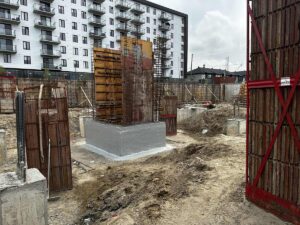
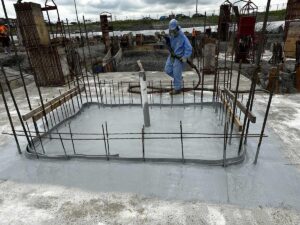
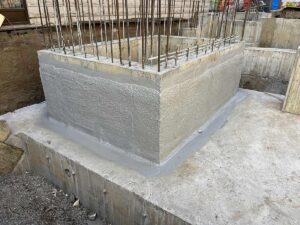
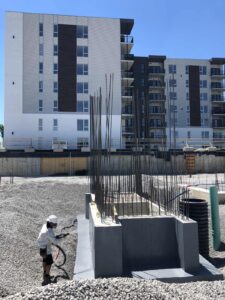
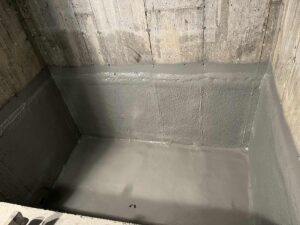
Polyurea stands far above traditional waterproofing solutions when it comes to protecting elevator hoistways in condominium developments. Unlike conventional membranes or coatings, polyurea forms a seamless, fully adhered, and monolithic barrier that conforms perfectly to the complex geometries of elevator shafts, eliminating the risk of leaks through joints, seams, or penetrations.
Its rapid curing time allows construction schedules to stay on track, a critical factor in high-rise projects where delays can be costly. Beyond speed, polyurea delivers exceptional mechanical strength, including superior impact, abrasion, and chemical resistance—essential for elevator shafts that are high-traffic, subject to vibrations, and exposed to moisture from surrounding structures.
Read More
Its flexibility allows it to accommodate structural movements and thermal expansion without cracking, ensuring long-term durability. In comparison, traditional waterproofing solutions—such as bituminous membranes, cementitious coatings, or sheet membranes—are often prone to tearing, delamination, or water ingress over time, especially under the demanding conditions of a multi-story residential development. With polyurea, developers gain a high-performance, reliable, and maintenance-free waterproofing solution that protects both the structure and the future residents, while also enhancing the overall value and longevity of the building.
Thermal Coatings
Spray-applied THERMAL COATINGS deliver a monolithic, seamless thermal barrier that outperforms traditional insulation by combining high R-value retention, air sealing, and radiant heat reflection in a single application. Its flexible, adhesion-optimized formulation conforms to irregular surfaces, eliminating thermal bridging, air infiltration, and moisture intrusion—common failure points in fiberglass, foam board, and cellulose systems. With superior vapor permeability, condensation control, and long-term dimensional stability, it maintains consistent thermal performance across extreme temperatures and environmental conditions. Rapidly installed and fully cured in hours, Thermal Coating reduces energy consumption immediately, often paying for itself through measurable heating and cooling savings within 1–5 years. Ideal for residential, commercial, and industrial applications, it functions not only as insulation but as an integrated building envelope enhancement, providing long-term protection, structural efficiency, and optimized energy performance.
Radon Defence
Spray-applied polyurethane foam provides a technically superior solution for radon mitigation beneath slabs, offering a continuous, monolithic barrier that rigid EPS insulation cannot achieve. Radon is a colourless, odorless radioactive gas that naturally emanates from soil and can accumulate to dangerous levels indoors, significantly increasing the risk of lung cancer over time. Spray foam’s ability to adhere to the subgrade and slab, filling every void, crack, and irregularity, ensures there are no pathways for radon infiltration, unlike EPS panels, which can leave gaps at seams or compress under load.
Additionally, spray foam is inherently moisture-resistant, preventing water-borne radon migration and protecting the slab from degradation and mold growth. Its structural stability under heavy loads maintains long-term integrity, while simultaneously providing thermal insulation, making it a multi-functional, long-lasting solution. By delivering a fully sealed, durable, and continuous barrier, spray foam offers unmatched protection against one of the most hazardous naturally occurring gases in the built environment.